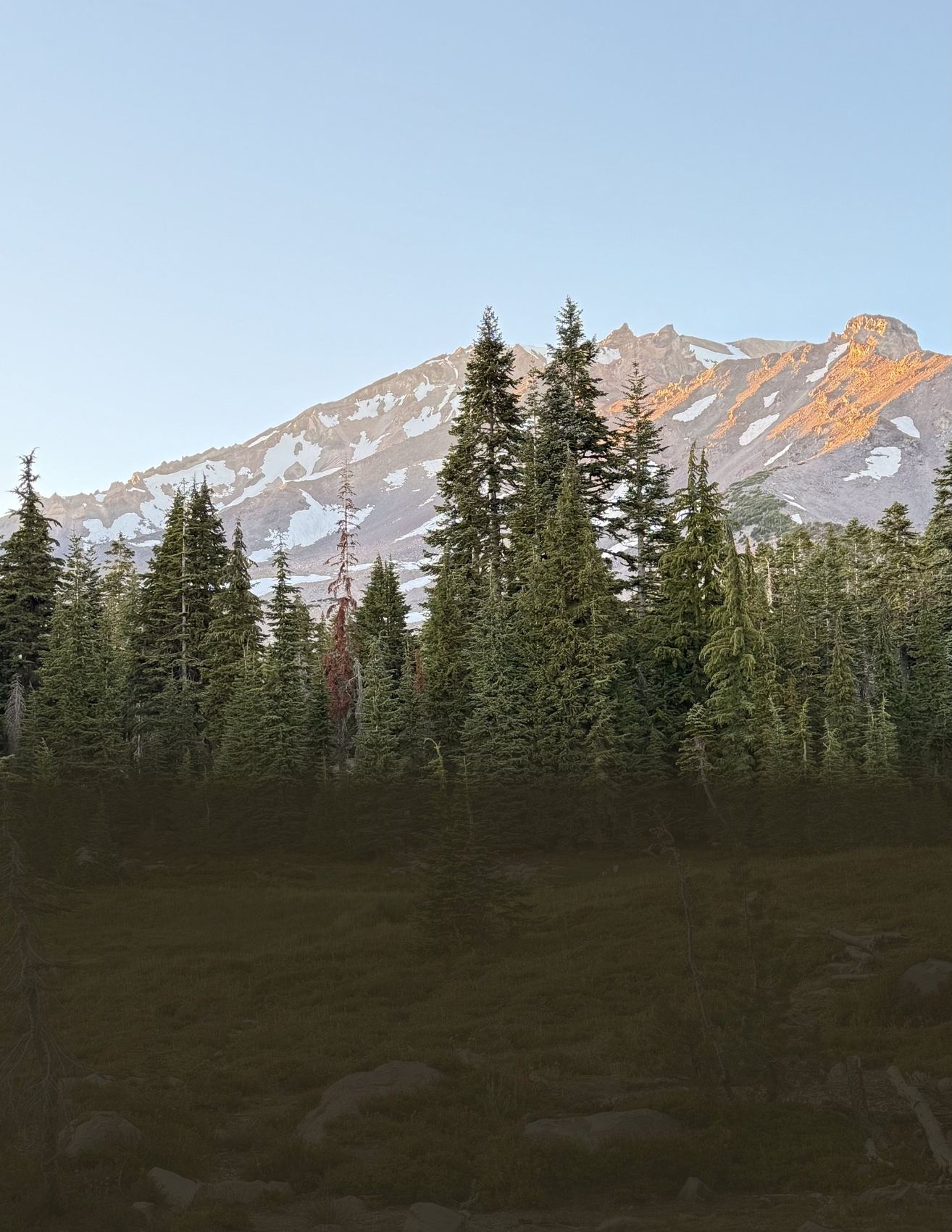
Radiant Flo
she has been on your mind
Called to Shasta
A journey into the mountain, her mysteries, and the stories that surround her
With love, Anya
A journey into the mountain, her mysteries, and the stories that surround her
Something brought you here. A photograph, a name that keeps surfacing, a friend who would not stop talking about a mountain in northern California. However it happened, you are curious, and that is reason enough to read on.
I want to be honest with you about what this guide is.
It is not a definitive account of Mount Shasta. No such thing exists. She holds many layers at once and they do not always agree with each other. There is the physical mountain, a volcano with a documented geology. There are the Indigenous peoples whose ancestral homelands surround her, whose cultures are living and present and not mine to interpret. There are the spiritual movements that formed around her over the last century, which have a traceable history of their own. There is a large body of modern esoteric lore. There are the unusual experiences visitors report. And there is my own relationship with her, which I hold as mine rather than as instruction for anyone else.
I have tried to keep those layers separate throughout these pages. Where something is documented, I say so plainly. Where something belongs to spiritual tradition, I name it as tradition. Where I am telling you what I experience, I say that too.
You do not have to believe any of it. Notice what resonates. Question what does not. Let some of it stay unresolved. We do not need to settle the mystery in order to enter it.
I am Anya. I facilitate Kundalini Activation and energy work, and I have been returning to this mountain since 2017. What I know about her is small next to what she is. This is what I have gathered so far.
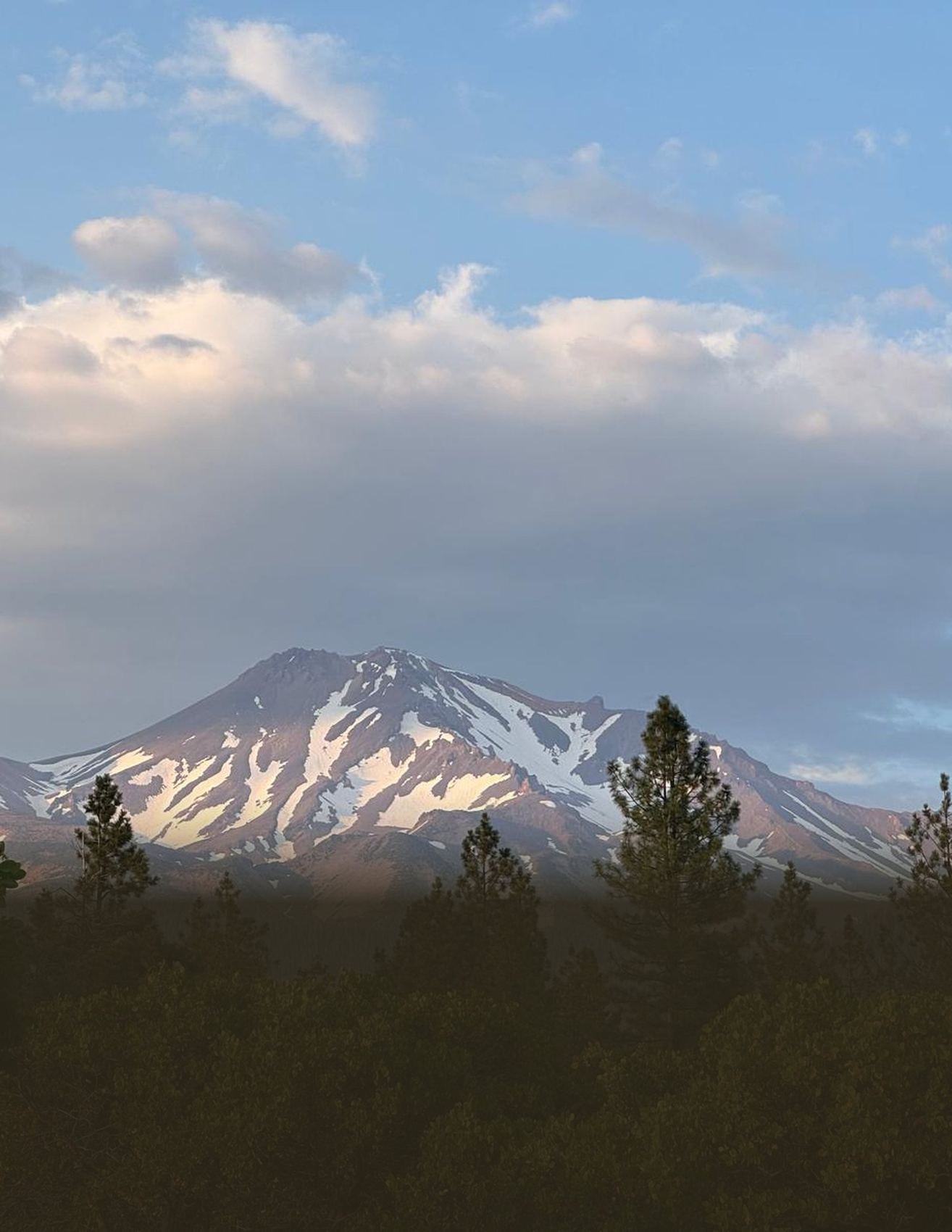
Mount Shasta stands approximately 14,163 feet in the southern Cascade Range of northern California. She is a stratovolcano built from overlapping cones over hundreds of thousands of years, with a second summit, Shastina, rising off her western shoulder.
What makes her strange is her solitude. Most great mountains belong to a range and share the horizon with their siblings. Shasta stands nearly alone. She lifts roughly ten thousand feet off the land around her with almost nothing to soften the rise, and on a clear day she is visible from a great distance.
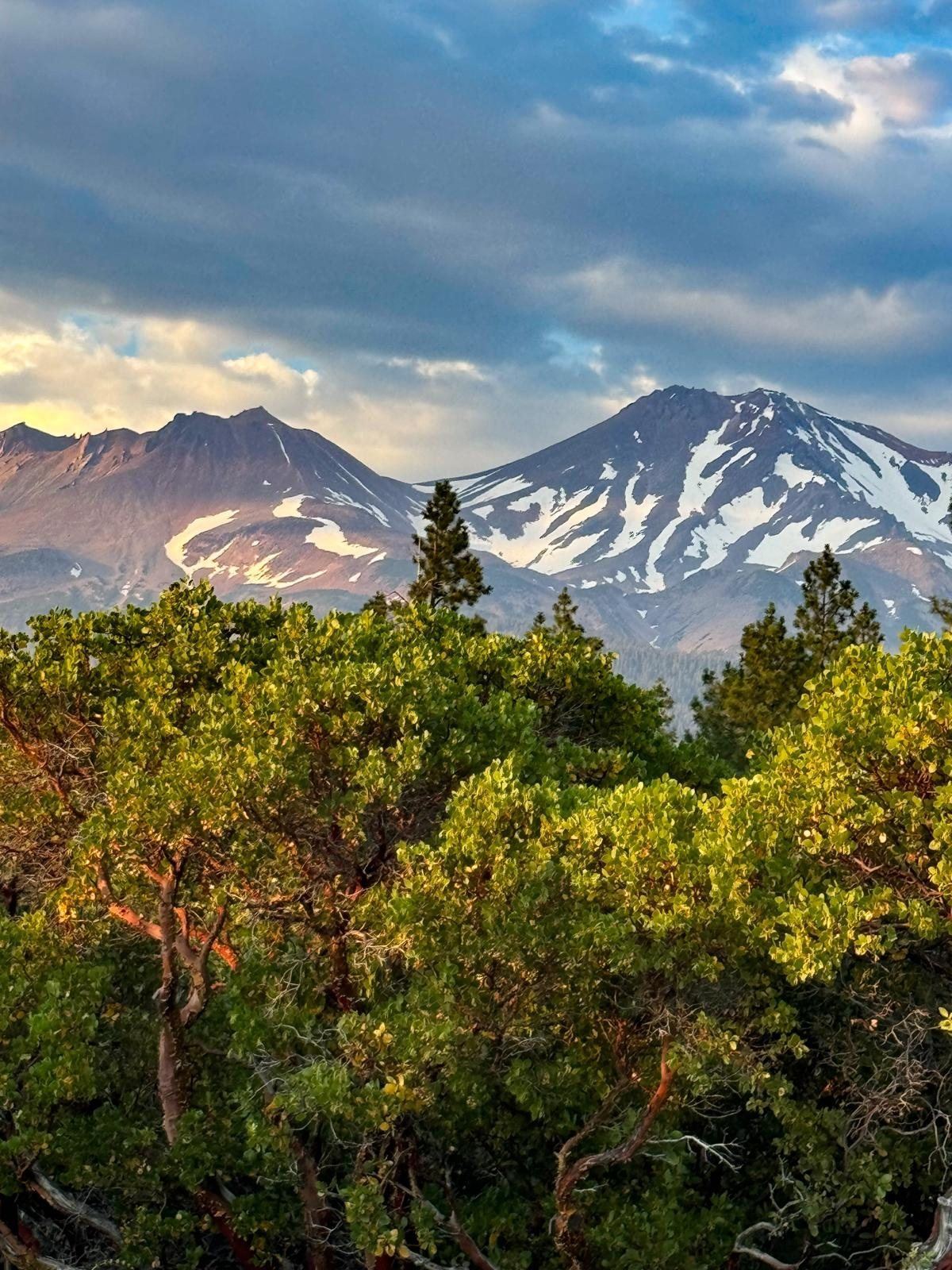
Seven named glaciers cling to her slopes, including Whitney, Bolam, Hotlum and Wintun.
Her volcanic geology also shapes the water below. Snow and rain infiltrate permeable volcanic rock, recharge groundwater aquifers, and later emerge through springs and seeps around the region.
That is the part everyone agrees on, and it is remarkable on its own.
Mount Shasta sits within the ancestral homelands of several Indigenous peoples, and their relationships with her are ongoing rather than historical.
I am not the person to explain what this mountain means to them. These are living cultures with their own voices, their own scholars, and their own ongoing work. Their traditions are distinct from one another and they are not interchangeable with anything else in this guide.
What I can say is that reverence for this mountain did not begin with the spiritual movements of the last hundred years. The people with the longest relationship to her are still here, and some of them are engaged in active work to protect their water, their ceremonies, and their access to sacred places.
You will find writing about Indigenous belief in most guides to Mount Shasta, including some that sound authoritative. I would rather point you toward the nations themselves than repeat what I have read secondhand. There are sources at the end of this guide.
If this mountain gives you something, learning whose land you are standing on is one honest way to begin returning it.
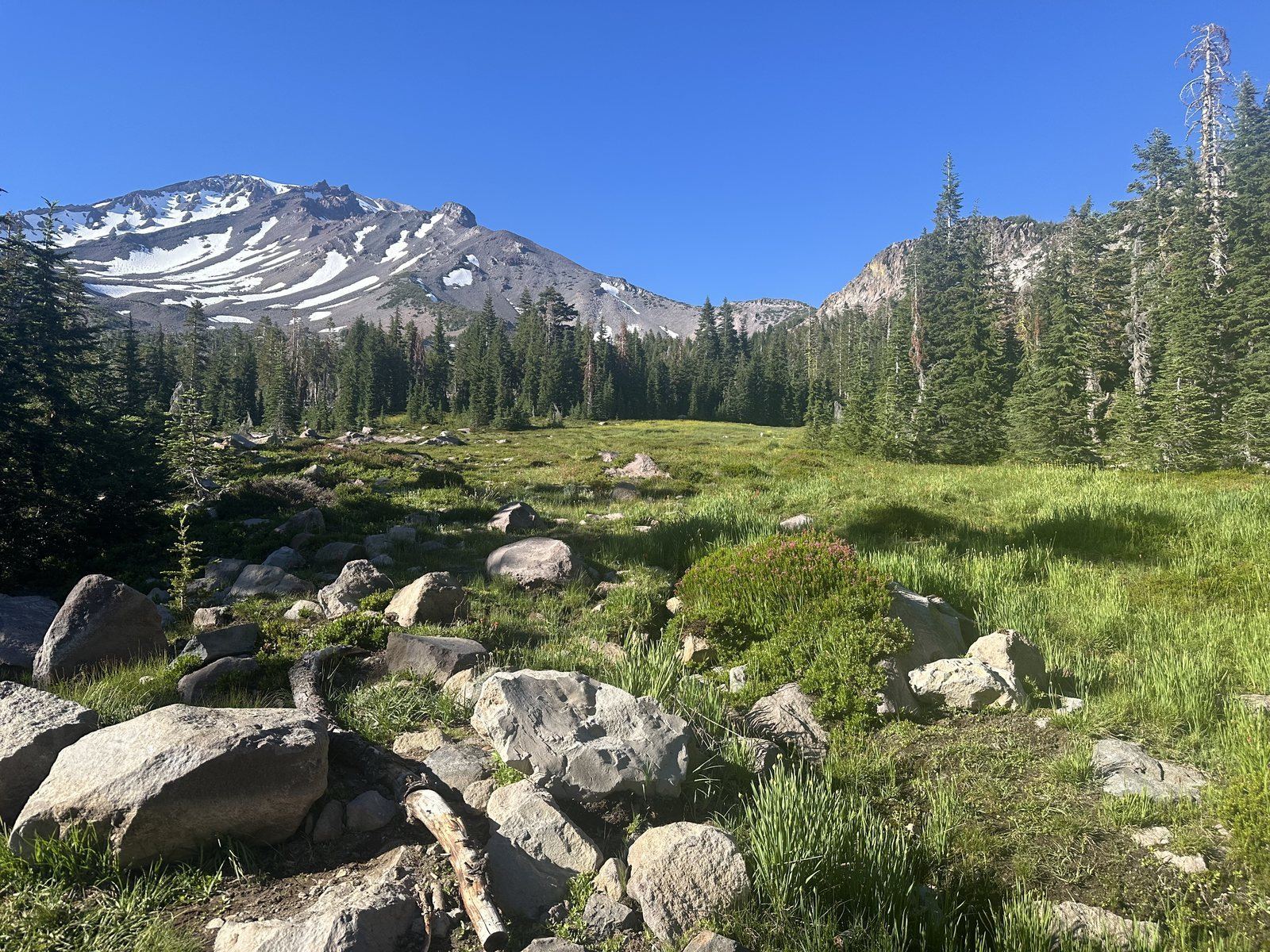
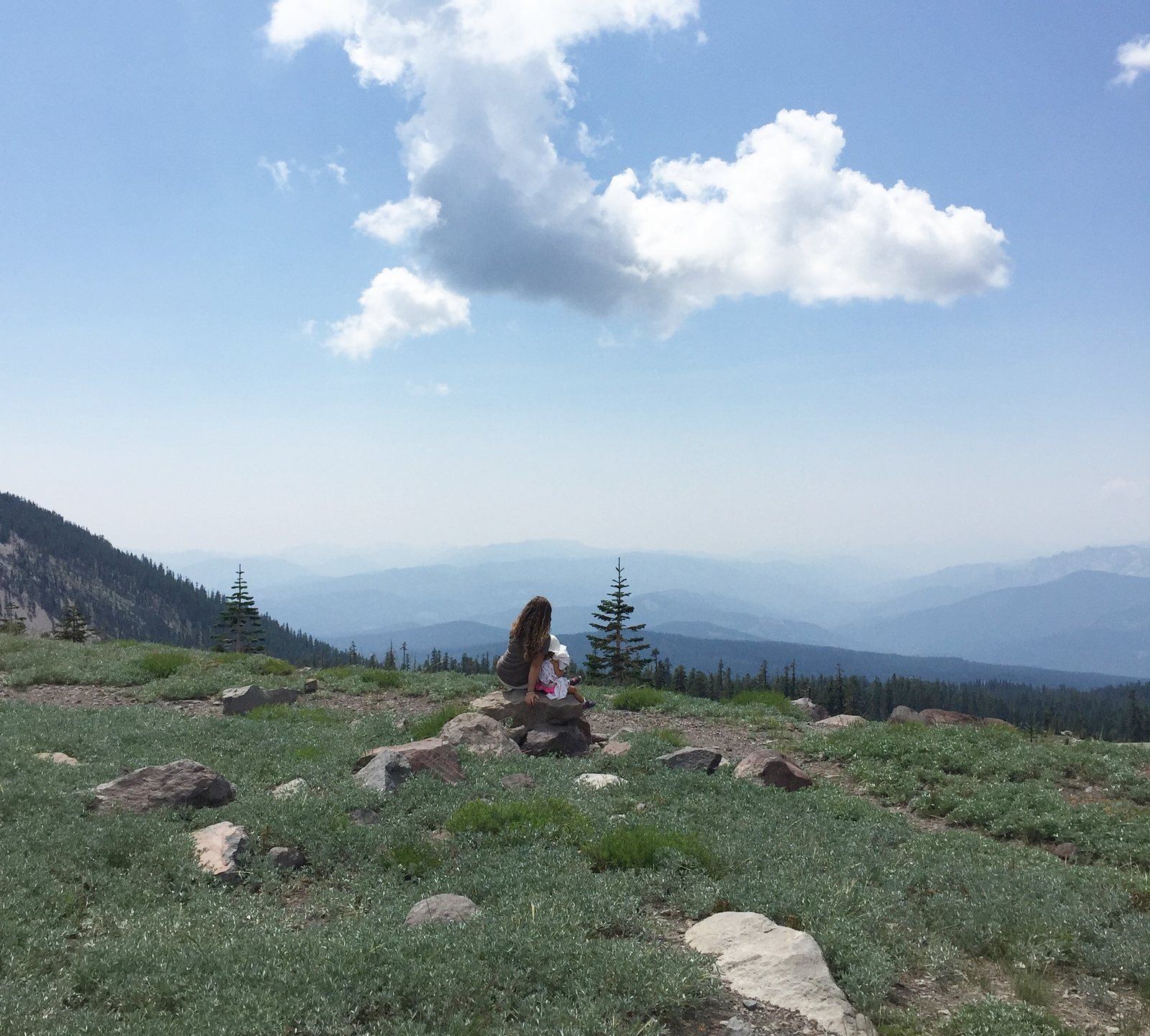
I was first called to her in 2017, for Lions Gate.
I did not know much about her then. I only knew that something in me kept turning toward that name. Mount Shasta. Lions Gate. The two of them together would not leave me alone.
So I went, with my two year old daughter and my aunt who was visiting from Russia. We drove in, and I looked up, and I saw her for the first time.
I came home. That is the only way I know how to say it. Not that I arrived somewhere beautiful. There was excitement and there was something majestic in her that met me before I had taken a step, and my heart opened so wide I could not contain it. We spent two days with her. We went up. I was mesmerized, and I understood I was only at the beginning.
Seven years later, in July of 2024, I heard about a Kundalini Activation retreat and the moment I heard the word Shasta it was an immediate yes. I was being initiated into this work then, and being on her while that was happening changed the shape of me. My light language came through on that mountain. I came home in awe, and then the integration took months. I could not stop dreaming of her.
So I went back that November for the 11:11 portal with a small circle of friends. In 2025 I brought people to her for the first time as an official retreat, and again that November.
What I keep noticing is how clearly she communicates with me. She tells me when it is time. She has never once been vague about it.
She is my teacher. She is my guide. She is the temple I return to, and I go with devotion. That is my relationship with her, not a claim about what she is.
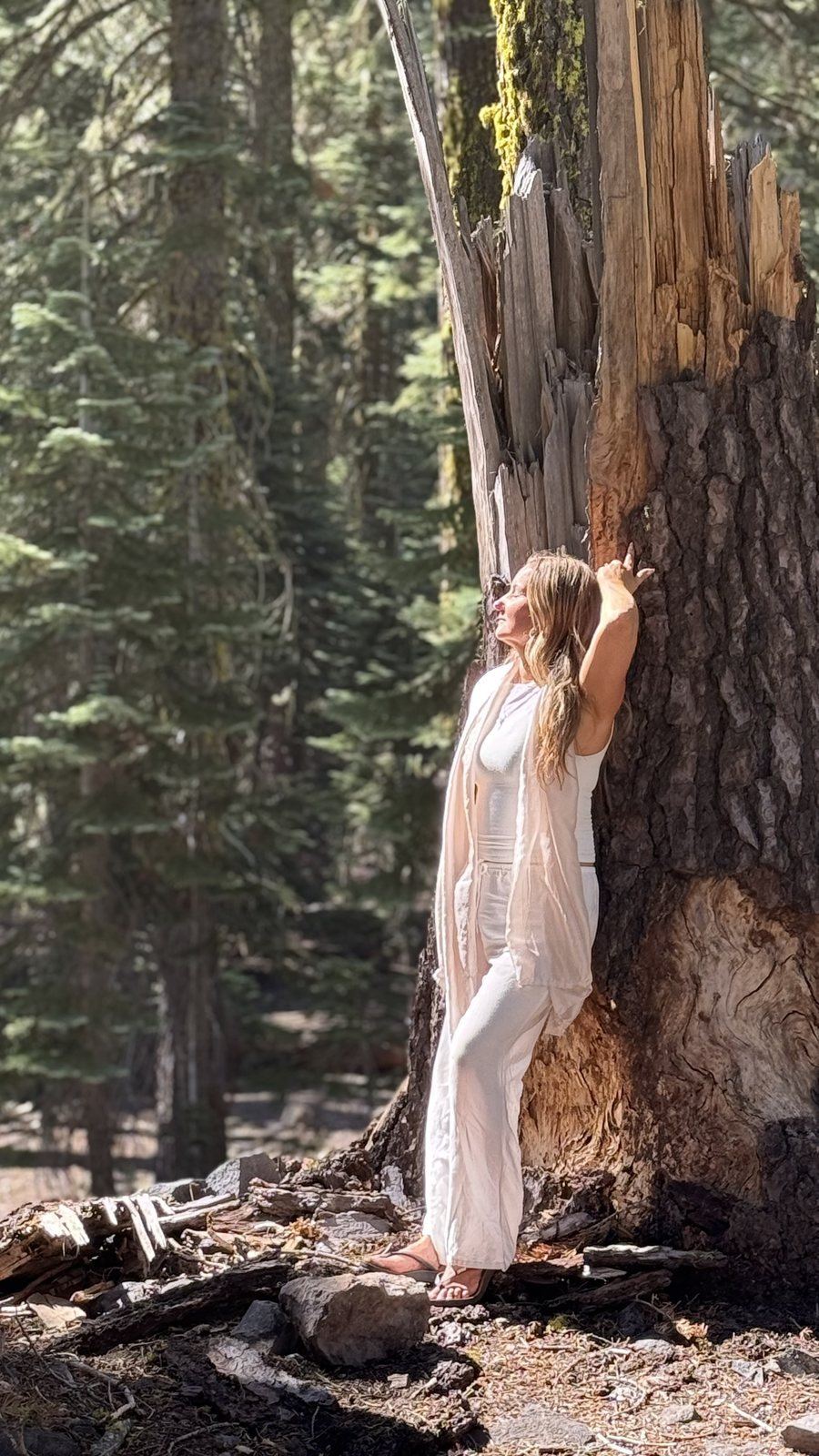
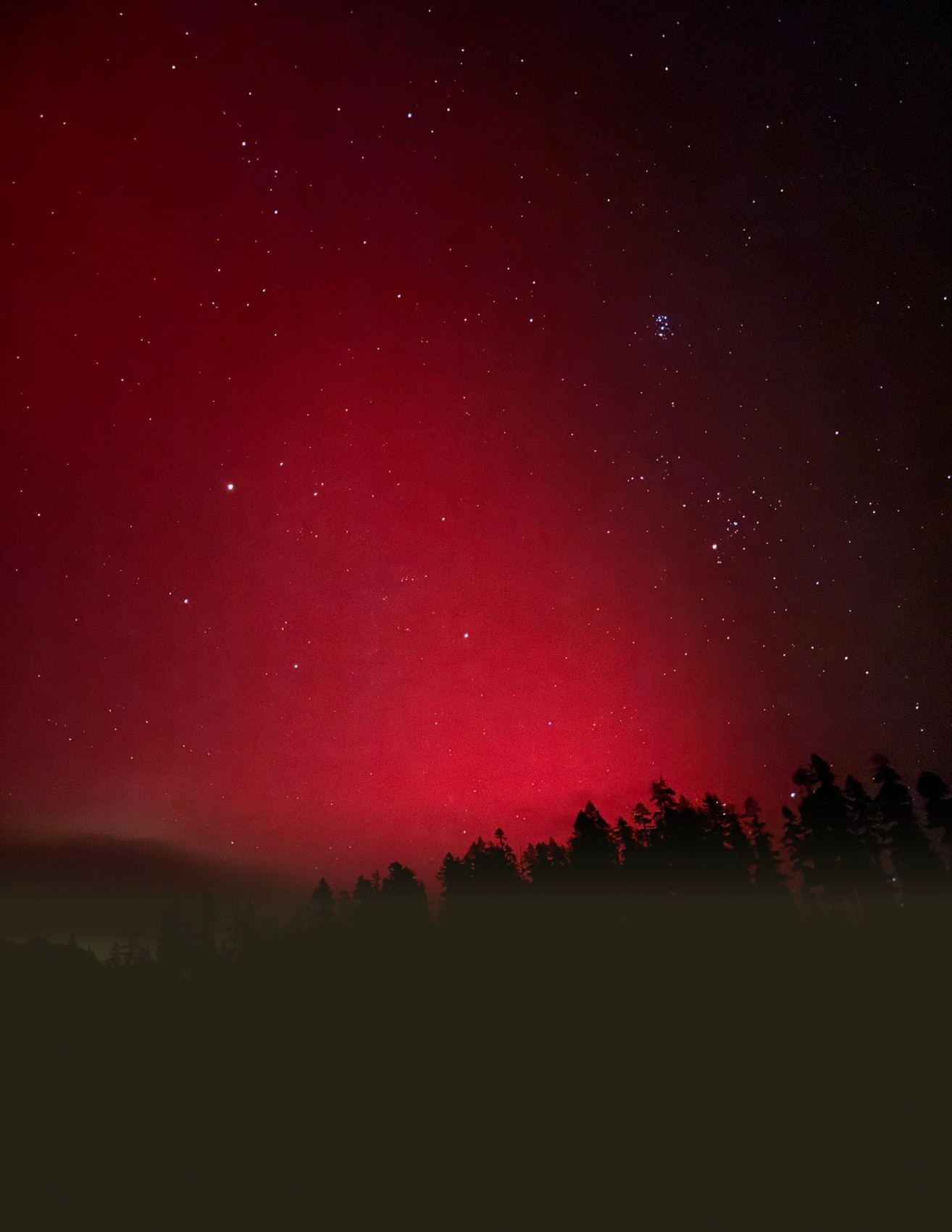
From here on we are in different territory. What follows is spiritual tradition, published esoteric literature, and experiences that visitors have reported, some of them mine. None of it is established fact and I will not present it that way. It is also the reason many people find their way to this mountain, and it deserves to be told well.
Within the lore surrounding Mount Shasta, the story begins with a lost continent. Lemuria, sometimes called Mu, is described as a civilization in the Pacific whose luminous beings lived heart led and telepathic, at ease with the earth rather than at war with it. When their land began to go under, the story holds that some of them survived by going inside the mountain.
Beneath her, the lore continues, is Telos, a crystal city of light. It is described as home to those same luminous beings, tall and long lived, working with sound and crystal and light, organized around what the teachings call the Seven Rays. These accounts most often name a high priest called Adama, whose teachings were published by Aurelia Louise Jones from Mount Shasta itself.
It is worth knowing that this body of lore is relatively modern. The idea of a hidden civilization inside Shasta enters print in the early twentieth century and grows from there.
People report reaching Telos in meditation and in dream far more often than they report finding a door. That is the honest shape of it.
Something I hear often from visitors, and have felt myself, is a kind of homesickness with no address. A grief for something never lived. Some seekers understand this as Lemurian memory surfacing. I do not know what it is. I only know it is common enough here to be worth naming, and that not knowing the cause does not make it less real to the person feeling it.
Modern Mount Shasta spirituality has a traceable history, and it is more interesting when you can watch it forming.
In 1875 the naturalist John Muir climbed her, was caught in a storm near the summit, and survived the night beside the hot sulfur springs at the top.
In the 1880s, Frederick Spencer Oliver began writing a manuscript that he attributed to a being he called Phylos the Thibetan. A Dweller on Two Planets was published posthumously in 1905, and it introduced the idea of a hidden civilization within the mountain.
In 1931 the Rosicrucian writer Harvey Spencer Lewis, under the name Wishar Cerve, published a book placing Lemurian survivors on Shasta directly. It sold widely and the association took hold in the public imagination.
Around 1930, Guy Ballard said he encountered Saint Germain while hiking on Mount Shasta. He later published accounts of those experiences under the name Godfré Ray King, including Unveiled Mysteries in 1934. Those teachings became foundational to the I AM Activity.
What is documented here is that these people lived, wrote, and published, and that their books shaped how the mountain is understood. What they claimed to have encountered is a matter of belief, and I leave it where it belongs, with you.
Within these traditions Saint Germain is described as the keeper of the violet flame, a light that transmutes what is dense in a person and returns it as freedom.
Start with something you can observe.
Mount Shasta frequently creates conditions favorable to dramatic lenticular clouds. Moist air lifts over her summit, cools, condenses, and forms a smooth lens shaped cloud that can hang almost motionless above the peak while every other cloud moves past it. This is ordinary mountain meteorology and it happens because of her shape and her isolation. It is also one of the most beautiful things you will ever see while standing in a parking lot.
Those same clouds are read differently within the lore surrounding the mountain, where they are sometimes described as craft resting unseen.
Stories of unusual lights and objects have also become part of the modern lore surrounding Mount Shasta. Some accounts describe multiple people witnessing the same phenomenon together. I cannot tell you what they saw.
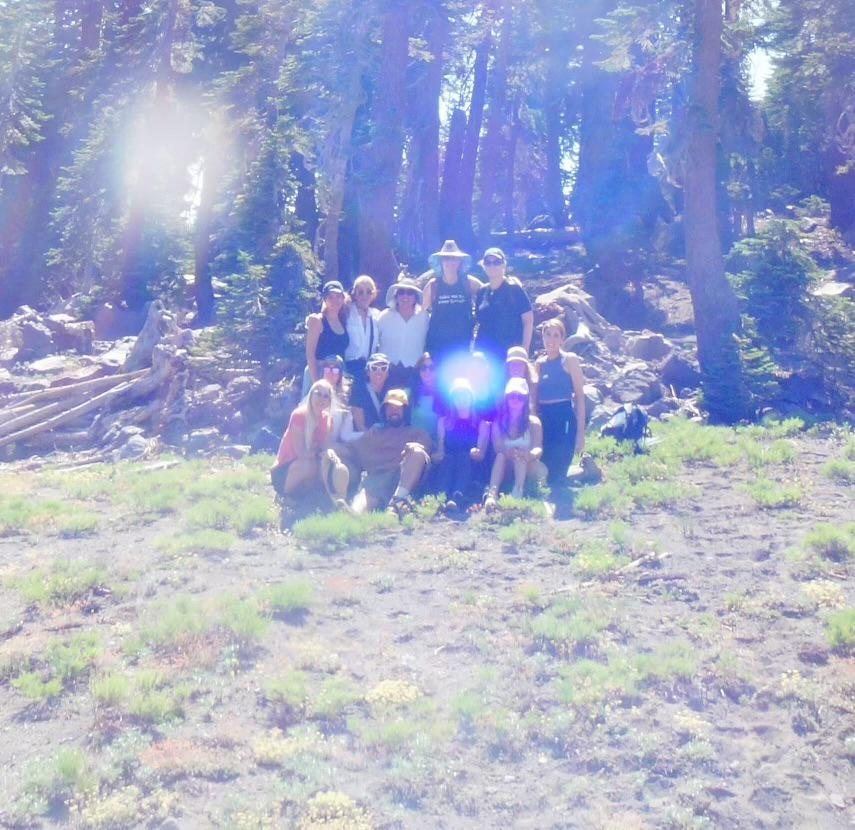
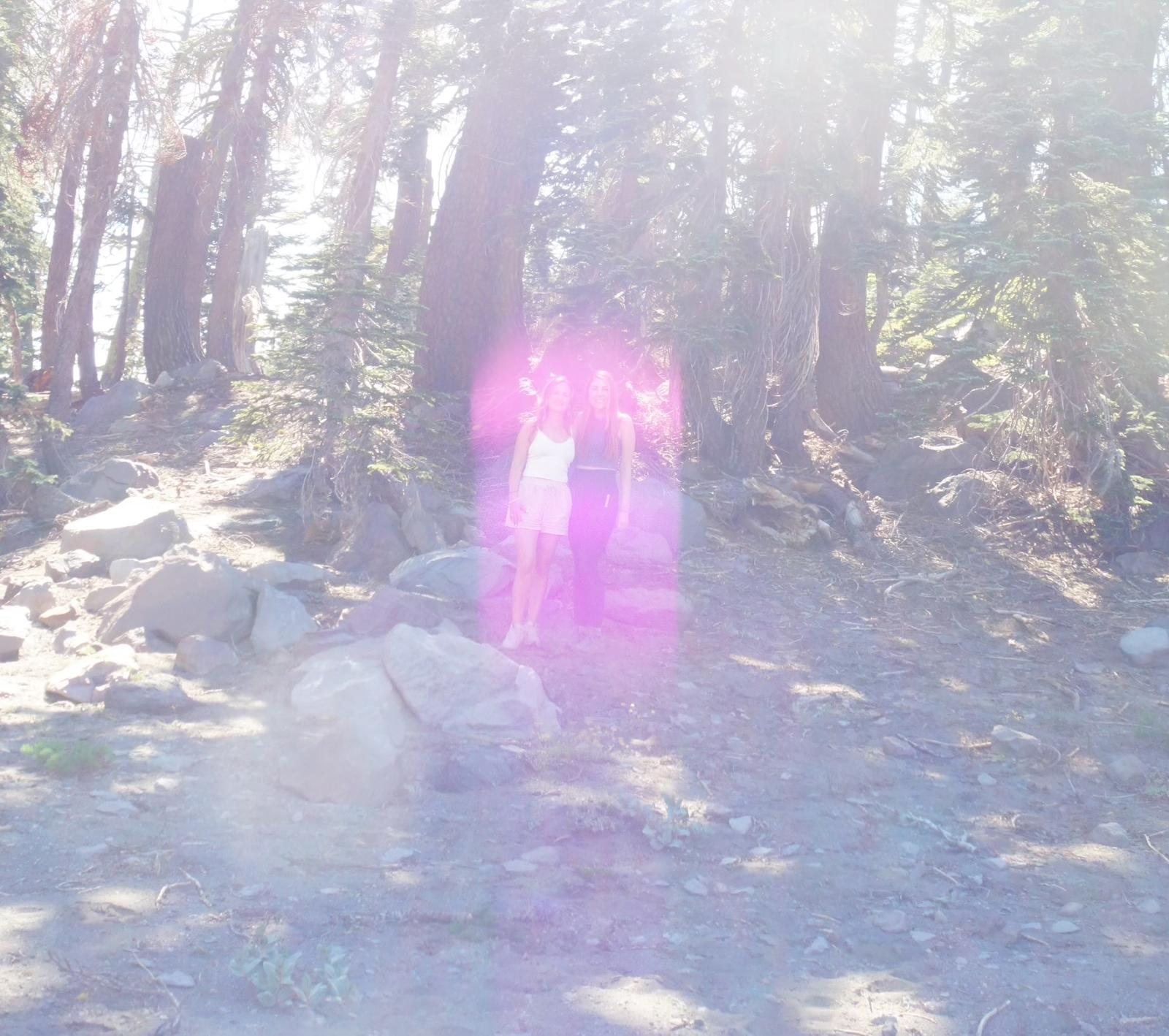
I have had experiences here I cannot explain, and photographs I cannot explain. What I notice in myself is that they tend to come when I am unhurried and open rather than when I am looking hard, though I hold that as a pattern in my own life rather than a method that produces anything.
I would rather leave this unresolved than tidy it. Look up while you are here, and let what happens be what happens.
These are not the most powerful places on Shasta. I do not think that is mine to rank. They are the places I return to, and this is what I do when I am there.
This is where I stop first, every time. I get out of the car, and before anything else I say who I am and why I have come. Sometimes out loud. It is a small thing and it changes the rest of the day for me.
I go slowly here and I stay on the path. I sit near the water and do not do very much. This is the place where I have cried the most and understood the least about why. The meadow is fragile, so I keep my footprint small and my visit unhurried.
Where I go afterward, when something has opened and I need somewhere still to put it. Water settles me. I have spent whole afternoons here doing nothing in particular.
Moving water, three of them, and the sound of it takes up all the room in my head. When I arrive heavy, this is where I go first.
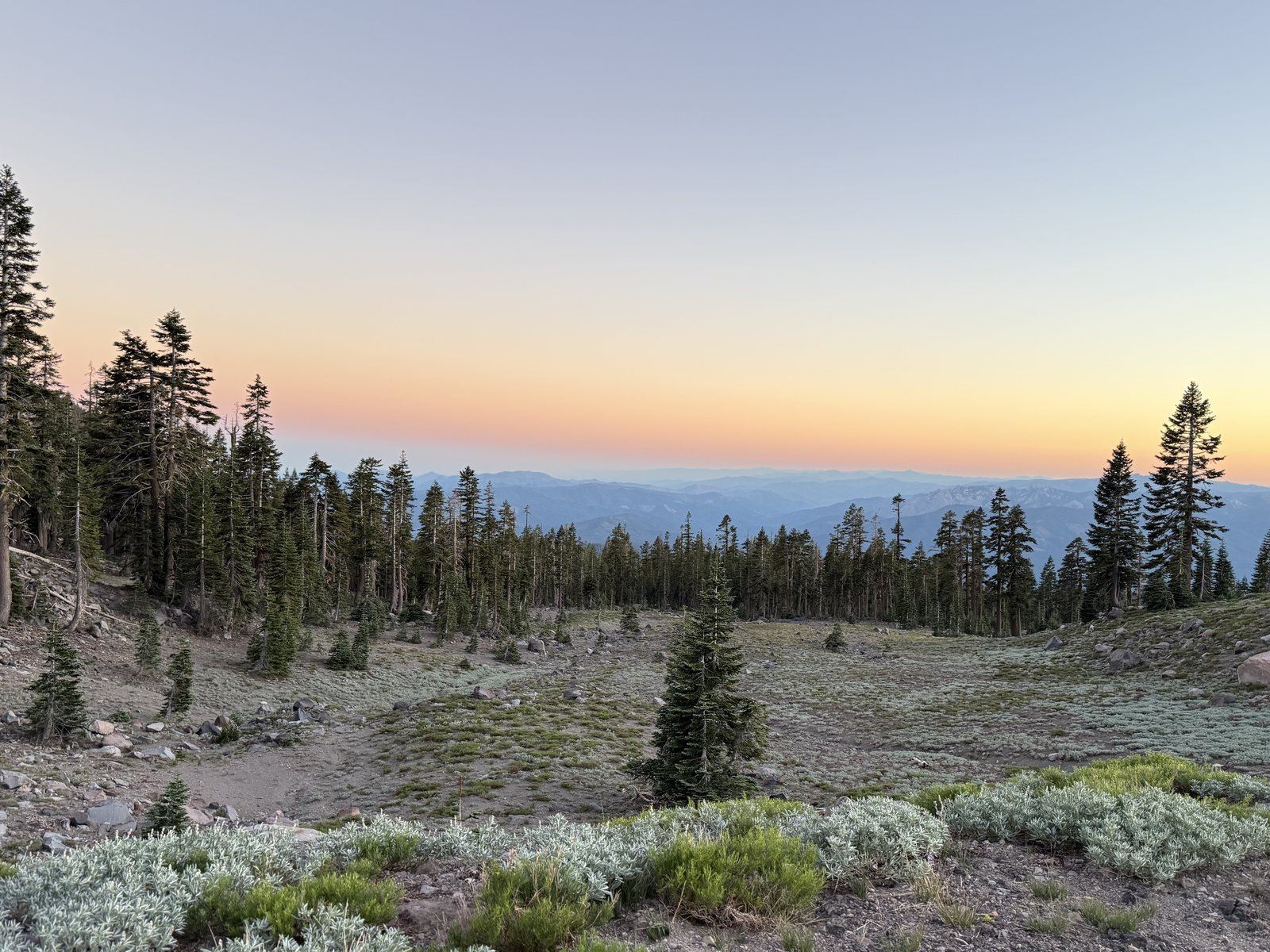
I am not going to tell you that the mountain is calling you. I do not know that, and neither does anyone else who has not met you.
What I do notice is that people arrive here having had a similar few months beforehand. The name keeps surfacing. Three different people mention her without knowing each other. A photograph stops the scroll and something in the chest responds before the mind catches up. Some have dreamed of a mountain they have never walked. Others simply became curious and could not say why.
I do not believe every synchronicity needs to become a sign. But I do believe curiosity is worth listening to, particularly when it does not fade.
So rather than telling you what any of it means, I will just ask.
Has she been on your mind lately, and for how long?
What was happening in your life when she first appeared?
What is it you are actually curious about?
You do not need an answer today. Notice the question and let it sit.
Whether or not you ever travel with me, here is what I would want you to know.
And a note on discernment. This mountain attracts genuine wisdom and it also attracts noise. You will meet certainty here that has not been earned, and some of it will be very confident.
Your own body remains the most reliable instrument you have. If something opens you, stay. If something contracts you, leave. You do not owe anyone your agreement, including me.
If Shasta has your attention, I hope you experience her. Maybe you will go alone, which is a good way to go. Maybe with someone you love. Maybe you will drive up for a weekend and never tell anyone why.
And some of you will want people with you while you go.
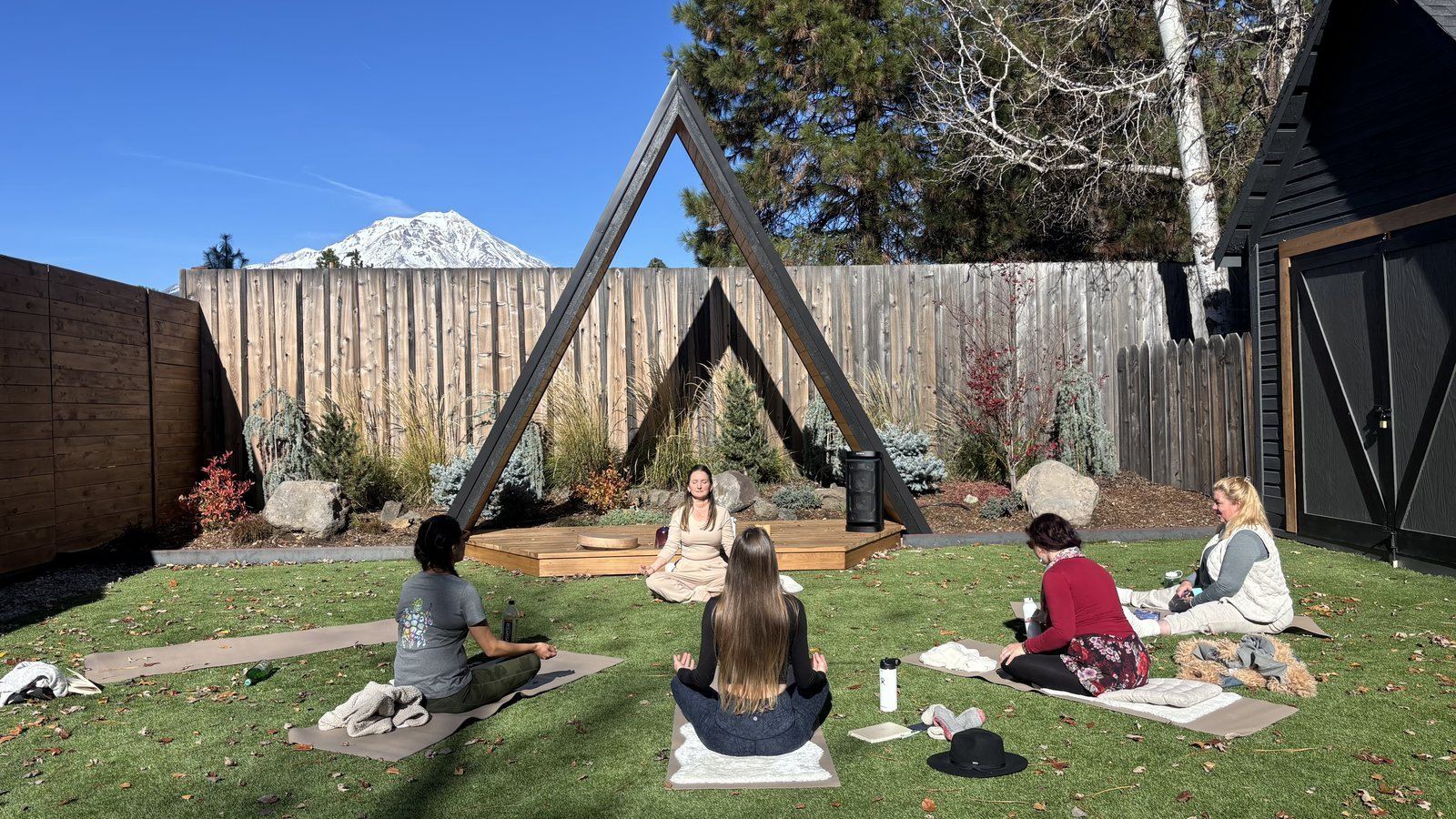
That is the work I do. I bring a small circle to the mountain and hold the container while we are there. We move slowly, spend real time on the land, and gather for ceremony in the evenings. I do not promise anyone an experience. I've watched people arrive with one idea of what their time here would hold and leave having experienced something entirely different.
I can't promise what Shasta will mean to you. What I can offer is a small group, careful facilitation, meaningful time on the land, ceremony, and enough spaciousness to actually be here.
The call is a conversation, not a sales call.
Indigenous traditions belong to the communities who carry them. Please seek these directly from the nations themselves.
These works are included to document the development of spiritual traditions surrounding Mount Shasta. Their inclusion is not presented as evidence that the metaphysical claims within them are objectively true.